


What is a girth?
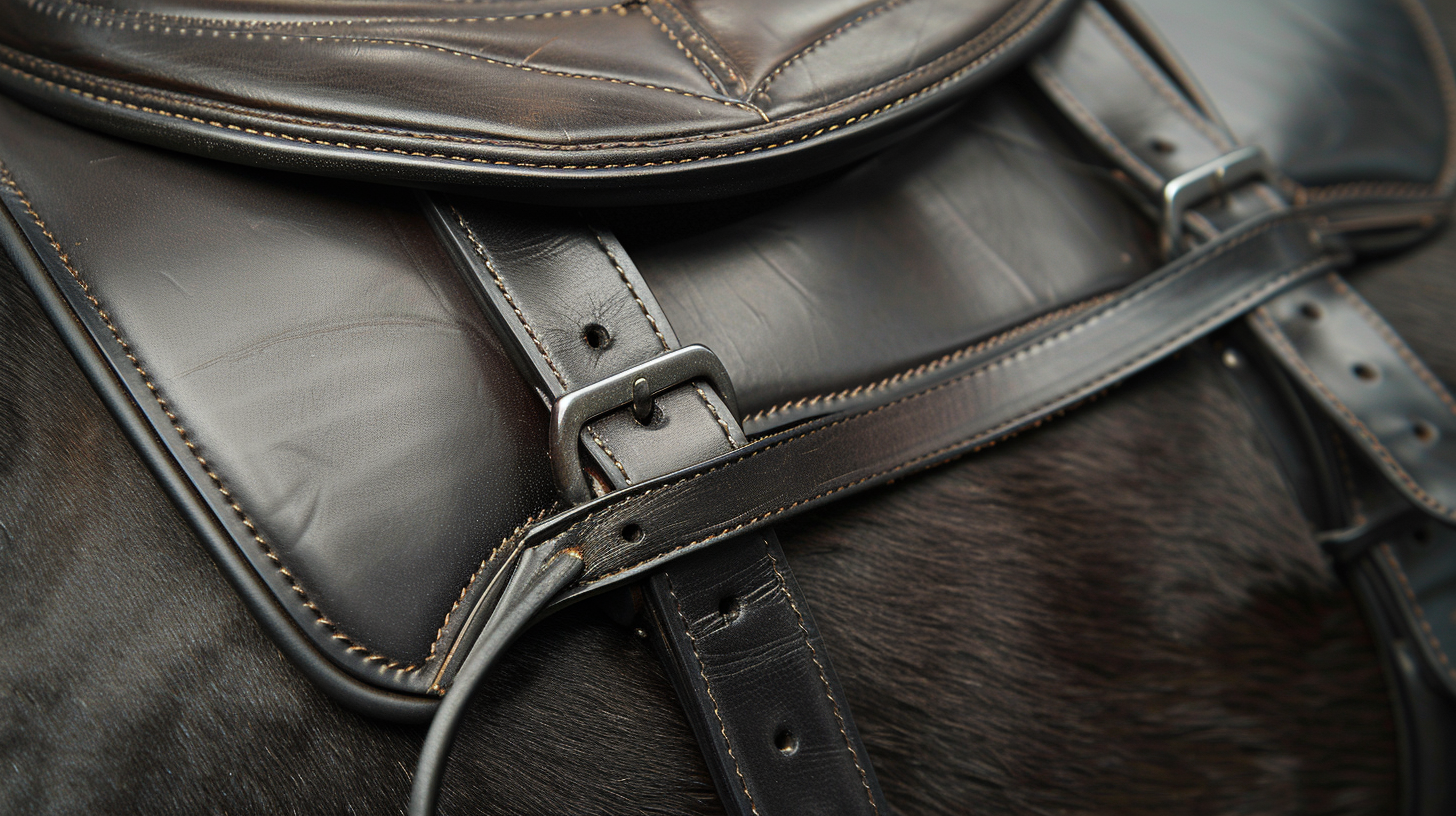
A girth is a wide strap placed under the horse’s belly and attached to the saddle’s billets. Its purpose is to keep the saddle stable during riding. Thanks to the girth, the saddle doesn’t slip sideways, forward, or backward, which protects the rider from falling and helps prevent rubs on the horse’s skin. A girth is essential both for leisure riding and during intensive training. It becomes especially important during jumping, sharp turns, changes of pace, and for beginner riders who are still developing a secure, balanced seat.
Types of Girths and Their Uses
Choosing the right girth is very important for the horse’s health and comfort during riding. Poorly fitted tack can cause pressure, chafing, and discomfort, which affects the horse’s well-being and freedom of movement. Girths vary depending on the riding discipline, the horse’s conformation, and the material they are made from.
Types of Girths Tailored to Each Riding Discipline
All-purpose girths – medium-length girths used with all-purpose saddles that combine features of jumping and dressage saddles. They stabilize the saddle in different gaits and distribute pressure evenly during everyday training.
Jumping girths – designed for dynamic movements in jumping saddles. They provide safety during canter, approach to the obstacle, and landing while helping absorb pressure.
Western girths – longer girths with one large buckle on each side, typical for western saddles. They stabilize the heavier saddle and are made from durable materials suitable for outdoor riding.
Check out Equinox products!
Girth Types vs. the Horse’s Conformation
Anatomical girth – features symmetrical cut-outs at the front and back, allowing it to fit well on horses with balanced conformation. Its shape allows the elbows to move freely, improving comfort and reducing irritation.
Asymmetrical girth – designed for horses with a wide chest and narrow front. A deeper front cut-out creates more space for the elbows and stabilizes the saddle, reducing movement during dynamic riding.
Crescent-shaped girth – intended for horses with short backs and wider ribcages, typical of Arabian and similar breeds. Its distinctive crescent shape prevents the girth from sliding forward and helps distribute pressure evenly.
Types of Girths Depending on the Material
Leather girths – durable and elegant. They adapt well to the horse’s body shape and distribute pressure evenly, but require regular care and conditioning to maintain flexibility.
Neoprene girths – lightweight, flexible, and easy to clean. They absorb pressure well and reduce the risk of chafing. However, they do not breathe as well as natural materials.
Cotton girths – soft, breathable, and gentle on the horse’s skin. They reduce the risk of chafing but wear out faster and require frequent washing.
Sheepskin girths – offer the highest level of comfort. They conform well to the horse’s body and distribute pressure evenly while providing excellent moisture absorption. However, they are more expensive and require careful maintenance.
Rope girths – once very popular but used less often today. They are lightweight and breathable but less durable and may sometimes cause skin irritation.
Gel girths – adapt well to the horse’s shape and provide comfort during riding. However, they have limited airflow and are best suited for shorter training sessions.
The Horse’s Comfort – Proper Girth Fit
A girth affects not only the rider’s safety but also the horse’s comfort. A poorly chosen girth or fastening it too tightly can lead to chafing and even pain for the horse. That’s why it’s important for the girth to fit properly—both in terms of length and material. Girths made from soft materials such as neoprene or leather provide greater comfort and reduce the risk of rubs. In addition, some girths feature elastic ends that adapt to the horse’s movement, allowing for easier breathing and improved comfort.
What to Consider When Choosing and Fitting a Girth

Proper girth fitting is essential for the horse’s safety and comfort. It should be tight enough to keep the saddle stable but not so tight that it restricts the horse’s movement.
After the first fastening, it is recommended to give the horse a moment to relax and then gently tighten the girth before mounting.
The saddle type and the horse’s body structure should also be considered. Wider girths work better for horses with larger bellies because they distribute pressure more evenly. The correct girth length is also important – a girth that is too short may restrict movement, while one that is too long will not stabilize the saddle.
For longer rides, padded girths or those with shock-absorbing elements can provide greater comfort and reduce tension on the horse’s back.
Girth Care and Maintenance
For a girth to perform its function properly and remain comfortable for the horse, it requires regular care. After each ride, it’s a good idea to wipe the girth to remove sweat, dust, and dirt—especially if it’s made of leather. Leather girths should be conditioned regularly to maintain their flexibility and to prevent rubbing. Synthetic girths are easier to maintain and often only need basic cleaning. Regular girth care extends its lifespan and helps ensure comfort and safety for both horse and rider for years to come.
How to Fasten a Girth Correctly – Step by Step
Prepare the girth and saddle
Before riding, make sure the girth is clean, straight, and not twisted. The saddle should be placed correctly on the horse’s back.
Attach to the billets
The girth buckles should be attached to the first and third billets on both sides of the saddle. The middle billet remains free as a spare.
Adjust the distance
The distance between the girth and the horse’s elbow should be approximately the width of a hand to prevent chafing.
First movement check
After walking the horse briefly, check whether the girth moves or causes pressure. If necessary, tighten it slightly.
Check from the saddle
Before trotting or cantering, check the girth again. The rider should be able to insert two fingers between the girth and the horse’s skin.
Final check
The girth should lie straight and evenly on both sides without twists or dirt. If you are unsure about the correct fastening, consult an instructor or an experienced rider.
What is a girth with a belly guard used for?
A girth with a belly guard serves a protective function when jumping over obstacles. The guard protects the horse’s sensitive belly from chafing and injuries, especially when the horse wears shoes with studs. It also provides a support point for the horse’s breastbone during take-off.
What is the function of a girth?
A girth stabilizes the saddle on the horse’s back, preventing it from shifting during riding. This helps the rider maintain correct position, while the horse doesn’t experience discomfort or pressure in sensitive areas. In addition, a girth can protect the horse’s skin from rubs and ensure even pressure distribution.
How should a girth fit?
A girth should be chosen so that it distributes pressure evenly across the horse’s chest, does not press on the elbows, and does not restrict freedom of movement. It’s important to take into account the horse’s conformation and the type of saddle.
What girth length should you choose?
The girth length should be matched to the type of saddle and the horse’s conformation. A girth that’s too short restricts movement, while one that’s too long won’t provide proper saddle stability.